
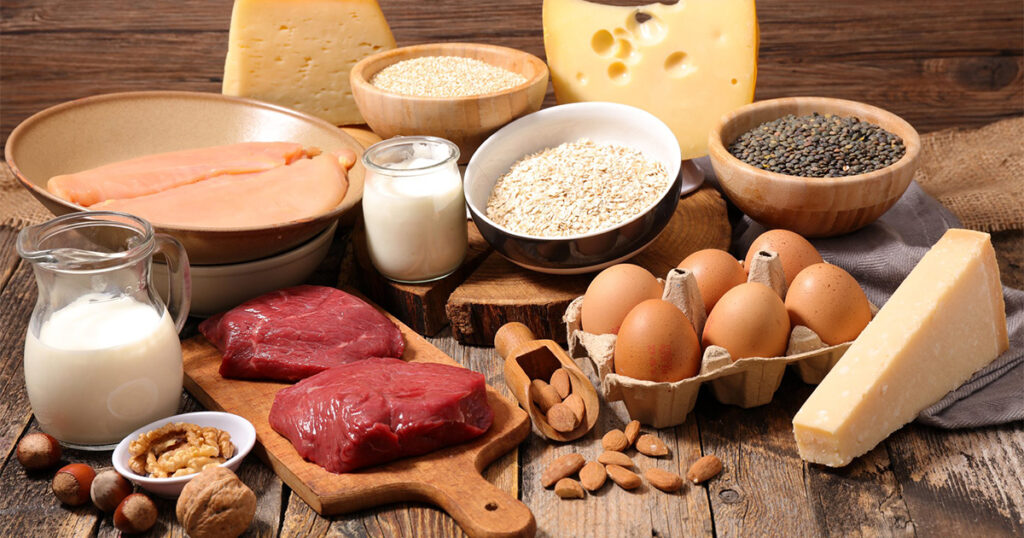
If you are trying to build muscle, one question probably comes up again and again: how much protein do you actually need for muscle gain?
Some people believe you need huge amounts of protein every day. Others focus almost entirely on protein shakes. In reality, building muscle is less complicated.
For most people who regularly perform resistance training, getting enough protein throughout the day matters more than chasing extreme amounts or consuming a shake immediately after every workout.
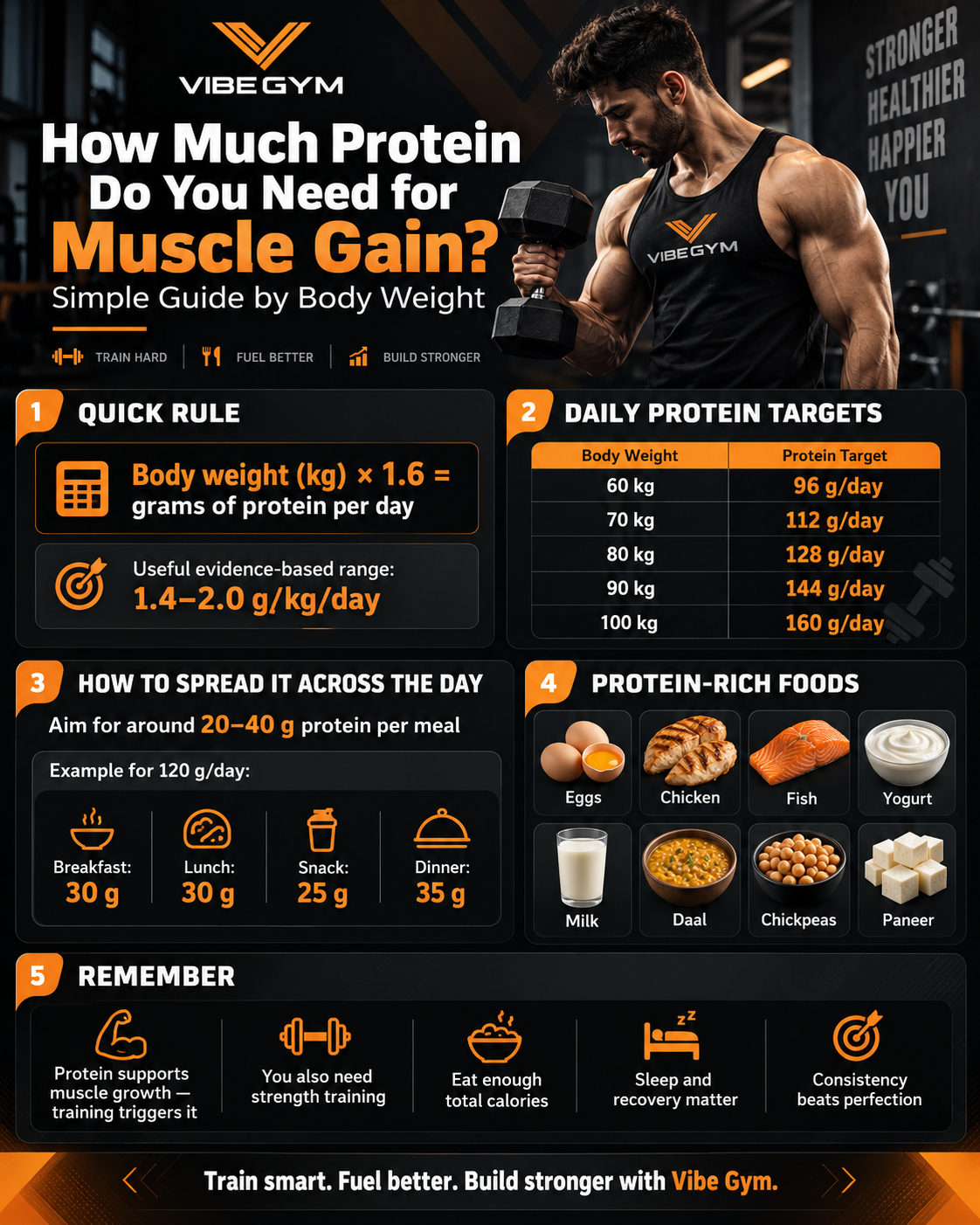
A commonly recommended range for active individuals looking to build or maintain muscle is around 1.4 to 2.0 grams of protein per kilogram of body weight per day. Research has also found that increases in muscle mass during resistance training tend to level off at around 1.6 g/kg per day for many healthy adults.
Here is a simple guide to calculating your daily protein needs.
How Much Protein for Muscle Gain?
A useful starting point is:
Body weight in kilograms × 1.6 = grams of protein per day
For example:
If you weigh 70 kg:
70 × 1.6 = 112 grams of protein per day
You do not necessarily need to hit exactly 112 grams every single day. Think of it as a practical target rather than a number that must be followed perfectly.
For most people doing regular strength training, somewhere within approximately 1.4–2.0 g/kg/day can be sufficient for supporting muscle growth when combined with appropriate resistance training and enough total food intake.
Protein Requirements by Body Weight
Here is a simple guide using 1.6 g of protein per kilogram as the central target.
| Body Weight | Approx. Protein Target |
| 50 kg | 80 g/day |
| 55 kg | 88 g/day |
| 60 kg | 96 g/day |
| 65 kg | 104 g/day |
| 70 kg | 112 g/day |
| 75 kg | 120 g/day |
| 80 kg | 128 g/day |
| 85 kg | 136 g/day |
| 90 kg | 144 g/day |
| 95 kg | 152 g/day |
| 100 kg | 160 g/day |
This table gives you an easy starting point when calculating protein intake for muscle gain.
Individual requirements can still vary depending on training experience, calorie intake, body composition, age, overall diet, and fitness goals.
Why Is Protein Important for Muscle Growth?
Strength training creates a stimulus that encourages your muscles to adapt.
Dietary protein provides amino acids that your body uses as building blocks for muscle proteins. Resistance exercise and protein intake work together to support muscle protein synthesis—the process involved in repairing and building muscle tissue.
However, eating more protein without resistance training will not automatically produce bigger muscles.
Your training program remains the primary stimulus.
For muscle gain, your overall plan should therefore include:
- Progressive resistance training
- Adequate protein
- Sufficient total calories
- Good sleep and recovery
- Consistency over time
Protein is important, but it is only one part of the muscle-building process.
Is 1.6 Grams of Protein Per Kg Enough?
For many people, yes.
A major meta-analysis examining resistance training and protein supplementation found that increasing total protein intake beyond approximately 1.62 g/kg/day did not produce additional increases in fat-free mass on average.
The researchers noted some uncertainty around the exact cutoff, so people who want a margin of safety may choose somewhat higher intakes.
That is one reason why recommendations often fall within the broader 1.4–2.0 g/kg/day range rather than specifying one exact number for everyone.
For someone weighing 80 kg, for example:
1.4 g/kg = 112 g protein
1.6 g/kg = 128 g protein
2.0 g/kg = 160 g protein
A target around the middle of this range is practical for many recreational lifters.
Do You Need 2 Grams of Protein Per Kg?
Not necessarily.
Two grams per kilogram sits within the commonly recommended range for active individuals, but that does not mean everyone must consume that amount to make progress.
Someone consistently consuming 1.6 g/kg while following a well-designed resistance-training program may already be getting sufficient protein for muscle growth.
Going dramatically higher does not automatically mean dramatically faster results.
If increasing protein makes your diet unnecessarily restrictive or pushes out carbohydrates, fruits, vegetables, healthy fats, and other nutritious foods, more is not always better.
How Much Protein Should You Eat Per Meal?
Your daily total is the main priority, but spreading protein across several meals can make hitting your target easier.
The International Society of Sports Nutrition notes a general recommendation of around 0.25 g/kg of high-quality protein per serving, or roughly 20–40 grams per meal for many people.
For example, someone targeting 120 grams per day could divide it across four meals:
Breakfast: 30 g
Lunch: 30 g
Snack: 25 g
Dinner: 35 g
There is no requirement for every meal to contain the same amount.
The goal is simply to avoid a situation where almost all your daily protein comes from one meal while the rest of the day contains very little.
Do You Need Protein Immediately After a Workout?
You do not need to panic if you cannot drink a protein shake the moment your final set ends.
Protein consumed around your workout can support muscle protein synthesis, but overall daily protein intake appears to be more important for long-term muscle gain than obsessing over a very narrow post-workout window.
If you have a protein-rich meal within a reasonable period before or after training, you are generally covering the basics.
For example, you might have:
- Eggs and yogurt before training
- Chicken and rice after training
- Milk or a protein shake after the gym
- Daal with another protein source later in the day
Consistency across weeks and months matters much more than being five minutes late with your shake.
Do You Need Whey Protein to Build Muscle?
No.
Whey protein is convenient, but it is not compulsory.
You can meet your daily protein intake for muscle growth through regular food.
Common protein-rich options include:
- Chicken
- Fish
- Eggs
- Milk
- Yogurt
- Beef
- Daal
- Chickpeas
- Beans
- Paneer
- Soy foods
A protein powder can simply make it easier to reach your target when your normal meals do not provide enough.
Think of whey protein as a convenient food supplement rather than a requirement for building muscle.
Can You Build Muscle Without Protein Supplements?
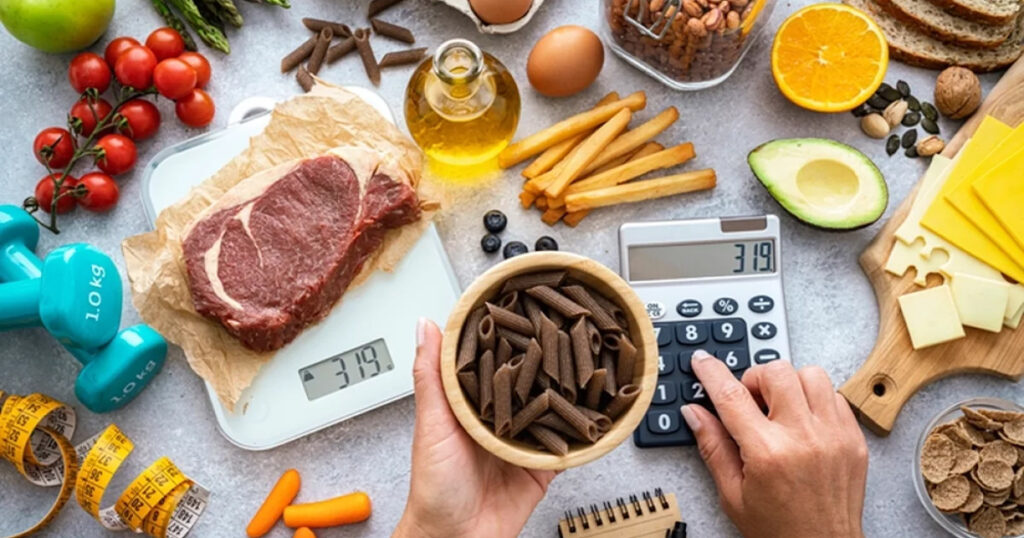
Absolutely.
Your muscles do not know whether amino acids came from a chicken breast, eggs, yogurt, lentils, or a protein shake.
What matters is your overall protein intake, dietary quality, training stimulus, and consistency.
If you can comfortably reach your protein target through food, there is no need to add supplements simply because other people at the gym use them.
High-Protein Foods for Muscle Gain in Pakistan
You do not need an expensive or complicated diet to increase your protein intake.
A Pakistani muscle-building diet can include familiar foods such as eggs at breakfast, chicken or meat with lunch, yogurt or milk as snacks, and daal, chickpeas, beans, fish, or meat at dinner.
Combining different protein sources throughout the day can make your diet both easier to follow and more varied.
Instead of asking, “Which single food has the most protein?” focus on building each major meal around a meaningful protein source.
For example:
Breakfast: Eggs + milk or yogurt
Lunch: Chicken + rice + vegetables
Snack: Yogurt, milk, or a protein shake
Dinner: Fish, chicken, beef, daal, or chickpeas with roti or rice
The exact foods you choose should match your calorie needs, budget, preferences, digestion, and overall health requirements.
Protein Alone Will Not Build Muscle
One of the biggest mistakes beginners make is focusing heavily on supplements while ignoring training.
You could eat plenty of protein every day and still make limited progress if your workouts are inconsistent.
For muscle gain, resistance training needs to gradually challenge your muscles.
That usually means improving some aspect of your training over time, such as:
- Lifting more weight
- Performing more repetitions
- Improving technique
- Increasing useful training volume
- Becoming more consistent
Protein supports your response to training. It does not replace training.
What About Calories?
Building muscle also requires sufficient energy.
If you constantly undereat while trying to gain significant muscle, progress may become more difficult.
You do not necessarily need an enormous calorie surplus. For many people, a modest surplus combined with resistance training, adequate protein, and consistent recovery is a more practical approach than aggressive “bulking.”
People trying to lose fat while maintaining muscle have different dietary considerations and may benefit from individualized nutrition guidance.
Common Protein Mistakes to Avoid
1. Thinking More Is Always Better
Once your protein intake is sufficient, doubling it is unlikely to double your muscle gains.
2. Depending Entirely on Protein Shakes
Supplements can be convenient, but whole foods should still make up the foundation of most diets.
3. Ignoring Calories
Protein is important, but your total energy intake also influences your ability to gain or lose weight.
4. Ignoring Your Training Program
Muscle growth requires an appropriate resistance-training stimulus.
5. Trying to Be Perfect Every Day
Your long-term habits matter much more than hitting your protein target to the exact gram every day.
How Much Protein Do You Need for Muscle Gain? The Simple Answer
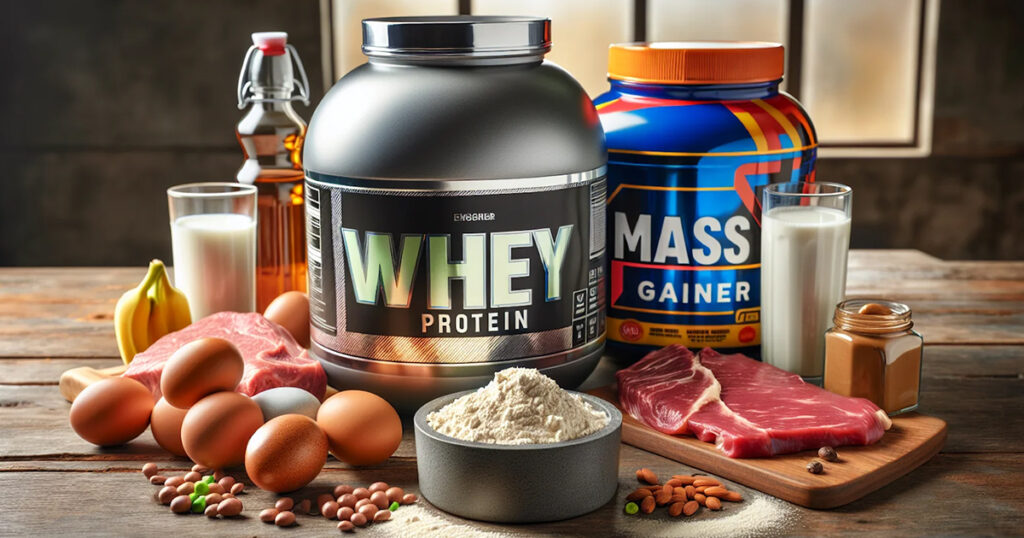
For most healthy people who regularly perform resistance training, approximately 1.4–2.0 grams of protein per kilogram of body weight per day is a useful evidence-based range.
If you want an easy number to remember, start around:
1.6 grams × your body weight in kilograms
So:
60 kg → about 96 g/day
70 kg → about 112 g/day
80 kg → about 128 g/day
90 kg → about 144 g/day
100 kg → about 160 g/day
Then focus on the factors that matter just as much: consistent resistance training, progressive overload, appropriate calories, good sleep, and recovery.
At Vibe Gym & Health Club, a structured training approach can help you combine your nutrition efforts with workouts designed around your individual fitness goals. Rather than chasing extreme protein targets or complicated routines, focus on sustainable habits you can maintain over the long term.
Frequently Asked Questions
- How much protein do I need per day to build muscle?
For many healthy exercising adults, approximately 1.4–2.0 g of protein per kg of body weight per day is sufficient, with around 1.6 g/kg being a useful practical target.
- How much protein does a 70 kg person need for muscle gain?
Using 1.6 g/kg as a simple target, a 70 kg person would consume approximately 112 grams of protein per day.
- How much protein does an 80 kg person need?
At 1.6 g/kg, an 80 kg individual would target approximately 128 grams per day.
- Is 100 grams of protein enough to build muscle?
It depends on your body weight. For a 60 kg person, 100 grams is approximately 1.67 g/kg, whereas for a 100 kg person it is only 1 g/kg. Calculating intake relative to body weight is more useful than using the same target for everyone.
- Is whey protein necessary for muscle gain?
No. Whey is a convenient way to increase protein intake, but you can build muscle while getting enough protein entirely from normal food.