

Starting a fitness journey often feels exciting. You buy new workout clothes, set fitness goals, and promise yourself that this time you will stick to your routine. But after a few weeks, work gets busy, energy levels drop, and suddenly skipping the gym feels easier than showing up.
Sound familiar? You are not alone.
Learning how to stay consistent at the gym is one of the most important steps toward achieving long-term fitness goals. The secret is not staying motivated every single day. It is developing workout habits that continue even when motivation disappears.
Whether your goal is weight loss, muscle building, or improving overall health, consistency makes a difference. At Vibe Gym & Health Club, a supportive training environment, structured fitness programmes, and professional guidance can help you build a sustainable routine.
Let’s explore practical strategies to maintain gym consistency, overcome common challenges, and make fitness a lasting part of your lifestyle.
1. Understand Why Gym Motivation Fades
Motivation is often strongest when you begin something new. You feel excited about reaching your fitness goals and seeing physical changes.
However, that excitement can decrease when results take longer than expected or everyday responsibilities become overwhelming.
Common reasons people struggle with workout consistency include:
- Setting unrealistic fitness expectations
- Following demanding workout schedules
- Feeling exhausted after work or studies
- Getting bored with repetitive exercises
- Not knowing whether their workouts are effective
- Comparing their progress with others
The important thing to remember is that losing motivation does not automatically mean losing commitment.
Instead of waiting to feel inspired, focus on creating a workout routine that fits naturally into your everyday life.
2. Set Realistic Fitness Goals You Can Maintain
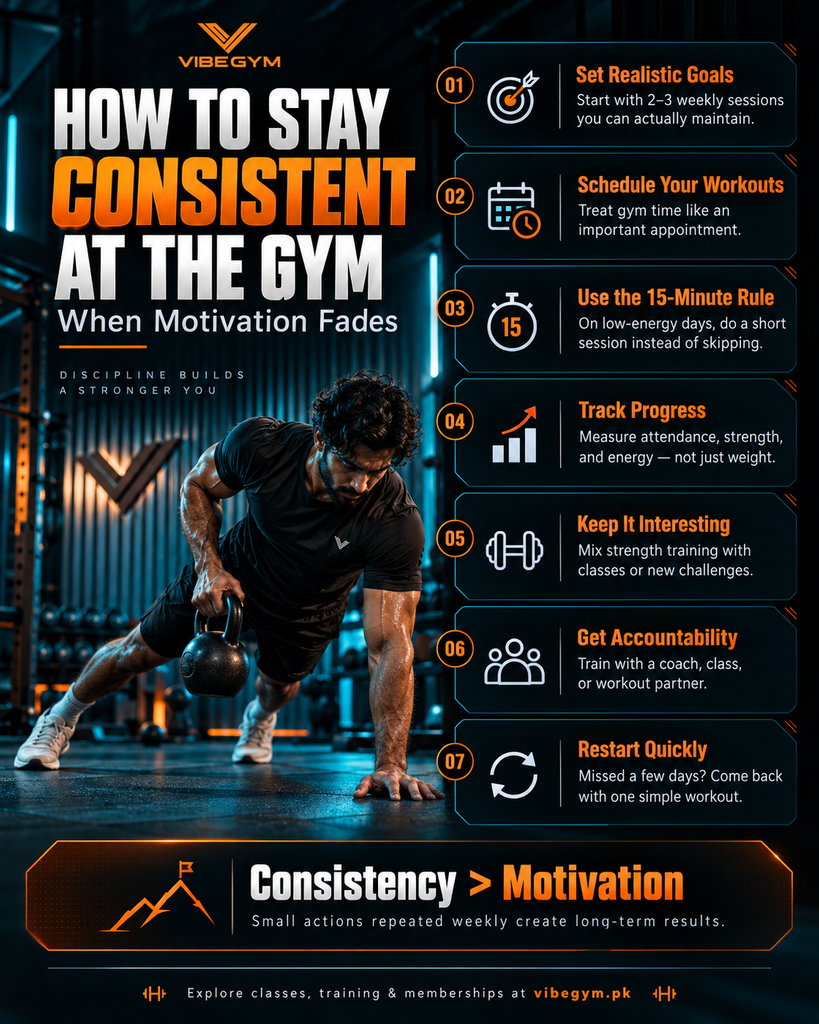
One of the most effective gym consistency tips is to start with achievable goals.
Many beginners make the mistake of planning intense workouts six days a week without considering their fitness level, work schedule, or recovery needs.
When the routine becomes overwhelming, they eventually stop.
A better approach is to establish smaller commitments.
For example, instead of saying, “I will work out every day,” aim to complete two or three manageable sessions each week.
Your goals might include:
- Attending the gym three times weekly
- Learning proper strength-training techniques
- Gradually improving exercise endurance
- Increasing weights or repetitions when appropriate
- Maintaining a regular exercise schedule for one month
These goals focus on actions you can control rather than expecting immediate physical transformations.
Over time, small achievements can build confidence and help make exercise a regular habit.
3. Create a Workout Schedule That Fits Your Lifestyle
If you want to know how to build a gym routine, start by looking at your daily schedule.
Do you feel more energetic before work? Or is an evening session easier to manage?
Choose workout times that fit your responsibilities and are realistic enough to repeat.
For example, a busy professional in Lahore might schedule gym sessions on Monday, Wednesday, and Friday after office hours.
A university student may prefer morning workouts before classes.
Treat these sessions like important appointments rather than optional activities.
Try preparing your gym bag the night before and setting a calendar reminder.
Maintaining a consistent time and place for exercise can support habit formation by making your routine more predictable.
Remember, the best workout schedule is not necessarily the most demanding one. It is the one you can follow regularly.
4. Use the Minimum Workout Rule on Low-Motivation Days
Some days, completing your regular workout will feel difficult.
Instead of forcing yourself through an exhausting session or skipping exercise completely, create a shorter backup plan.
For example, your usual workout might last 45 minutes. On a particularly busy day, you could complete a comfortable 15-minute session instead.
Your shorter workout might include:
- Five minutes of easy walking
- A few sets of familiar strength exercises
- Light mobility or stretching
This strategy helps you maintain the routine without expecting maximum performance every day.
However, if you are ill, injured, or experiencing unusual pain, prioritise rest and appropriate medical advice.
Consistency does not mean pushing through every obstacle. It means finding a sustainable way to keep progressing.
5. Build a Plan for Common Gym Consistency Challenges
Even a well-designed fitness routine can face unexpected interruptions.
Creating backup strategies in advance can help you respond without giving up on your goals.
| Common Challenge | Practical Solution |
| Feeling tired after work | Choose a shorter, lighter workout or move the session |
| Not having enough time | Schedule a manageable 20-minute session |
| Getting bored with workouts | Explore a suitable new fitness class |
| Missing several gym days | Restart with a comfortable session |
| Feeling unsure about exercises | Ask a qualified trainer for guidance |
| Not noticing progress | Track strength, stamina, and attendance |
| Struggling with accountability | Schedule sessions with a friend or coach |
Having a backup plan reduces the need to make difficult decisions when your motivation is already low.
6. Track Progress Beyond the Weighing Scale
Another important way to improve workout consistency is to recognise progress that goes beyond body weight.
Fitness improvements are not always immediately visible in the mirror.
You might notice that you can complete additional repetitions, lift a slightly heavier weight, or walk longer without feeling exhausted.
These achievements matter.
Consider maintaining a simple workout journal to record:
- Number of gym sessions completed
- Exercises and weights used
- Improvements in repetitions or endurance
- Energy levels during workouts
- Personal milestones and achievements
Review your progress every few weeks rather than judging yourself after every session.
If your primary goal is weight loss, remember that body weight naturally fluctuates and does not tell the whole story.
Celebrating measurable improvements can help you stay engaged with your long-term fitness journey.
7. Keep Your Workouts Interesting and Enjoyable

Doing the same exercises repeatedly can make gym sessions feel monotonous.
Although consistent training structure is important, adding suitable variety can help maintain your interest.
You might combine strength training with occasional yoga, kettlebell workouts, or kickboxing sessions depending on your fitness goals and experience.
At Vibe Gym & Health Club, members can explore different fitness classes, including strength training, yoga, kettlebell training, and kickboxing.
These activities offer opportunities to develop different skills while making exercise more engaging.
The goal is not to change your entire programme every week. Instead, choose activities you enjoy and maintain enough structure to measure progress.
When you enjoy the workout experience, showing up can feel less like an obligation and more like a positive part of your day.
8. Use Personal Training and Accountability to Stay on Track
Sometimes, maintaining gym consistency becomes easier when you have professional guidance.
A personal trainer can help you establish realistic goals, understand exercise techniques, and follow a structured programme suited to your abilities.
This can be especially useful for beginners who feel uncertain about gym equipment or struggle to plan effective workouts.
Vibe Gym & Health Club offers personal training and group fitness programmes designed for different experience levels.
Working with a trainer may also provide valuable accountability through scheduled sessions and regular progress reviews.
If you are exploring personal training in Lahore, read Vibe Gym’s guide on how to choose a personal trainer.
Remember that accountability should encourage progress, not create pressure to ignore your recovery needs.
9. Learn How to Restart After Missing Workouts
Missing a gym session does not erase your previous effort.
Work deadlines, family responsibilities, travel, and health concerns can interrupt even well-established exercise routines.
The problem often begins when one missed workout turns into several weeks away from the gym.
Rather than trying to compensate with an extremely intense session, return gradually.
Start with familiar exercises at a manageable intensity. If your break has been lengthy, reduce the training load and rebuild your routine.
Avoid treating exercise as punishment for missed days.
The goal is to return to consistent activity, not to make up for every workout you missed.
10. Follow a Simple Four-Week Gym Consistency Plan
If you are struggling to restart your fitness journey, a short habit-building plan can make the process feel more manageable.
The following example focuses on establishing regular gym attendance rather than achieving dramatic results.
| Week | Main Focus | Suggested Action |
| Week 1 | Establish your routine | Schedule two manageable gym sessions |
| Week 2 | Build familiarity | Repeat your schedule and prepare a backup workout |
| Week 3 | Improve consistency | Add an optional third session if appropriate |
| Week 4 | Review your progress | Evaluate attendance, energy, and workout performance |
This is a flexible example, not a fixed training prescription.
The CDC recommends that adults aim for at least 150 minutes of moderate-intensity aerobic activity each week, along with muscle-strengthening activities on two or more days.
If you are currently inactive, begin with manageable amounts and increase gradually according to your health, fitness level, and recovery.
11. How Vibe Gym & Health Club Can Support Your Fitness Consistency
Choosing a supportive training environment can make a meaningful difference when you are trying to maintain an active lifestyle.
Vibe Gym & Health Club focuses on helping people develop strength, confidence, and long-term fitness habits.
Its facilities and services include professional trainers, personal training, structured fitness classes, and modern exercise equipment.
Whether you prefer independent gym workouts or instructor-led sessions, having access to different training options can help you find an approach that suits your preferences.
Vibe Gym also provides class timetables, making it easier to plan exercise around your daily commitments.
Explore the Vibe Gym class timetable to find available training sessions and confirm the latest schedule.
With realistic goals and appropriate support, you can focus on building a routine that lasts beyond your initial burst of motivation.
Consistency Matters More Than Motivation

Learning how to stay consistent at the gym is about developing habits that support your lifestyle, even when motivation fades.
You do not need perfect workouts, extreme fitness plans, or instant results to make meaningful progress.
By establishing realistic goals, following a manageable schedule, tracking improvements, and allowing enough time for recovery, you can make exercise a sustainable part of your routine.
If you are looking for a supportive fitness gym in Lahore, Vibe Gym & Health Club offers training programmes, expert guidance, and facilities to support different fitness journeys.
Ready to build a workout routine you can actually maintain?
Visit Vibe Gym & Health Club to explore its facilities, fitness classes, and membership options.
Stay consistent. Keep improving. Find your Vibe.
Frequently Asked Questions
How do I stay consistent at the gym when I have no motivation?
Start by creating a realistic schedule, preparing your workout essentials in advance, and choosing manageable sessions. Focus on maintaining your routine rather than waiting until you feel motivated.
How many days a week should a beginner go to the gym?
Many beginners can start with two or three gym sessions per week, depending on their health, goals, and recovery needs. Other physical activities, including walking, can complement gym workouts.
What should I do if I skip the gym for a week?
Restart with a manageable workout rather than trying to compensate for missed sessions. If you have been inactive for longer, gradually rebuild your training intensity.
Can a personal trainer help me stay consistent?
A qualified personal trainer can provide structured workouts, guidance, progress monitoring, and accountability. These factors may make it easier to maintain regular exercise habits.
How long does it take to build a gym habit?
There is no fixed timeline. Habit development varies between individuals and depends on factors such as routine stability, personal circumstances, and the complexity of the activity. Focus on repeating achievable actions rather than reaching a specific number of days.